Leighton Moss RSPB Fieldtrip – 17th November 2013

Although we sometimes combine this trip with a visit to Sizergh Castle in search of Hawfinches, today tt was decided to go straight to Leighton Moss RSPB and make for the public causeway in the hope of seeing Bearded Tits that had been coming to the grit trays that have been provided for them. At first there was nothing there so we made a quick visit to the public hide, but all we could see were the odd Gadwall and Shoveler plus a few Mallard and Black-headed Gulls.

Male and Female Bearded Tits on the grit trays
So we returned to the grit trays and met up with the others in our group who were just arriving. We stood around for a while and were eventually rewarded with a male and female Bearded Tit on the trays for a few minutes. They soon moved back into the reeds and out of sight but not before a Wren had got in on the act and joined them on the trays.

While we were waiting to see Bearded Tits we heard a Water Rail squealing from somewhere in the reed bed and on a few occasion, I also heard a Song Thrush from some nearby bushes, a Great Spotted Woodpecker flew across to one of the trees, a Cormorant flew over and a Marsh Harrier flew low over the reed bed. Two of our members had arrived a lot earlier than most of us and so had walked to the “lower hide” where they had also seen Pintail, Kingfisher and Bullfinch.

Back to the main reserve where Nuthatch, Marsh Tit, Mistle Thrush and House Sparrow were seen. A short walk to “Lillian’s Hide” gave us Tufted Duck, Teal and a distant view of a few Goldeneye making frequent dives but one of these was looking a little different from the others and some careful checking through the scope showed it was a female Long-tailed Duck. Also from here we could see a Common Gull perched on a stump in the water and a Grey Heron flew in and landed nearby.

From the “Tim Jackson Hide” we had some good views of a Marsh Harrier flying round and eventually perching on an old tree stump and there was a small group of Wigeon not far from the hide.

Our last stop was at the hides near the coast where we saw a number of different waders such as Snipe, Redshank, Spotted Redshank, Lapwing; Knot and Curlew were heard. A Kingfisher flew past the hide and we also saw Shelduck, Pintail again, a small flock of Starlings, Little Egret, Kestrel and a distant Peregrine perched on a stump out on the saltmarsh. With the help of a telescope, on another patch of water in the distance we could see two Whooper Swans, Great Black-backed Gulls and some Black-tailed Godwits.

In all we had 55 different species of birds, some common, some we were hoping to see and some we didn’t expect to see. Thanks to Al once again for the trip and to Martyn for my lift.
Jeff Hurst 

LOS Annual Reports

As a lot of members have their annual report sent via email, would any member who wishes to have a printed copy please let me know as soon as possible. An email to me at jdisley@talktalk.net or a telephone call to 01942 672264 will be most helpful.

Previous editions of all our annual reports since 2000 and newsletters since May 2011 are available on the Reports Page on this website.  From this page they can be downloaded to your computer and printed if desired.

Thank you 
Joan Disley – Editor

Christmas Special Fieldtrip to Rostherne Mere

We are having an extra fieldtrip on Sunday 15 December to Rostherne Mere in Cheshire.  Please note that we are meeting at the usual place (Doctors Nook car park facing the Library in Leigh) at 9:00am which is a little later than usual.  Car sharing will organised on the day and you can click here for a map and more details.

Rostherne is the largest of the Cheshire meres and also the deepest, with the original basin having been deepened by salt subsidence. Being exceptionally deep for a natural lowland lake, the Mere's water rarely freezes over and in hard winters can support large numbers of wintering wildfowl. The main habitats are open water and woodland.

Rostherne Mere is primarily of importance for its wintering wildfowl populations, particularly pochard. Mallard, teal, pintail and shoveler are also regular visitors and in cold weather ruddy duck, gadwall and goosander often visit the site. The surrounding reed beds support a large breeding population of reed warblers and bittern is a regular visitor during the winter months. Birds of the surrounding woods include all three native woodpecker species together with tawny owl, sparrowhawk and kestrel. Scrub areas are home to reed bunting, willow warblers and whitethroat.

Everyone is welcome, both existing members and prospective new members, for what should be a very interesting trip with the possibility of seeing a Bittern which has recently been seen here.

Al Foy

Annual Subscriptions Are Now Due

Our very reasonable annual subscriptions are now due and so a prompt payment would be appreciated. Full details of this year's fees and the benefits of being a member are are on the membership page.

Please note that you can pay your subscription at any Friday night meeting or fieldtrip.  If you rather send a cheque in the post, please e-mail our treasurer Raymond Meredith at this address:  

leighos.treasurer@gmail.com

Raymond will then email you back with his postal address.

Great Grey Shrike on Astley Moss

Great Grey Shrike on Astley Moss -  (c) Jon Taverner
Following on from the last two issues of the Leigh Journal which featured rare birds in the Leigh area, I sent them a photograph and some text about another very rare bird which was seen for just a few hours on Astley Moss on Sunday 20 October. The bird, which is a Great Grey Shrike, was found by Dave Thacker who spends much of his spare time on the Moss looking at wildlife and the photo was taken by Jon Taverner, a local bird photographer who can be seen most days at Pennington Flash.

When Dave found the bird he sent a text to the County Bird Recorder who then alerted many of the local birders. I was there within 15 minutes as I live in Tyldesley, and fairly quickly many of the birders already at Pennington Flash left for a quick dash down the East Lancs Road to Astley Moss. Soon there were at least 25 people looking for the Great Grey Shrike, which didn't disappoint those who turned up early. Unfortunately, it only hung around for a couple of hours and those who came later missed it.

I suppose you could call it a 'Twitch' - (c) David Shallcross
All Shrikes are migrants, within Europe or to Africa in winter. Great Grey Shrikes are regular but scarce visitors to the UK. They arrive on the east coast in autumn and many stay throughout winter and into spring (sometimes as late as April or May), when they migrate back to their breeding grounds in Scandinavia.

The Great Grey Shrike eats small mammals, rodents, reptiles and birds as well as beetles and other insects. It often stores it food in a 'larder' for eating later by impaling it on a thorn. You can see from the photo that it has a hooked bill which, along with its long, sharp claws, is well-adapted to tearing apart the flesh of its victims. The black mask and grey plumage are distinctive features of the bird.

The Great Grey Shrike was a 'lifer' for me as I've never seen one before and we've had a good year for rarities in our recording area, including the Glossy Ibis at Horwich, the Lesser Scaup at Pennington Flash and the Pectoral Sandpiper at Rumwoth Lodge. Let's hope there's more to come!

Martyn Jones

Free Guided Bird Walks at Pennington Flash on Saturday 26 October

We're very pleased to announce that the L.O.S. will be taking some more free guided bird walks around the hides at Pennington Flash this coming Saturday, 26th October.  Please meet at the Visitor's Centre at 10am where we will have spotting scopes, binoculars and bird identification sheets for you to borrow.  The walks will finish around midday.

Although primarily aimed at our Young Birders' Club members, everyone is welcome to attend, but all youngsters must be accompanied by a responsible adult.

We look forward to seeing you there!

L.O.S. Video Archive - Black-faced Bunting

Ah, remember the 90's GMTV when Eamon Holmes was thin(ner), when Mr. Motivator was keeping us fit and 'Watching' was on TV. Well here's some archive video footage about a rather special little bird that popped into Pennington Flash for a few weeks back in 1994.


Thanks to our own Teresa Fayle for supplying the video and starring in it with her husband Alan, along with Peter Alker former ranger and now with the Wigan Leisure and Culture Trust and the sadly missed Roger Wood who took the photograph.

Enjoy, I look forward to reading your comments below.

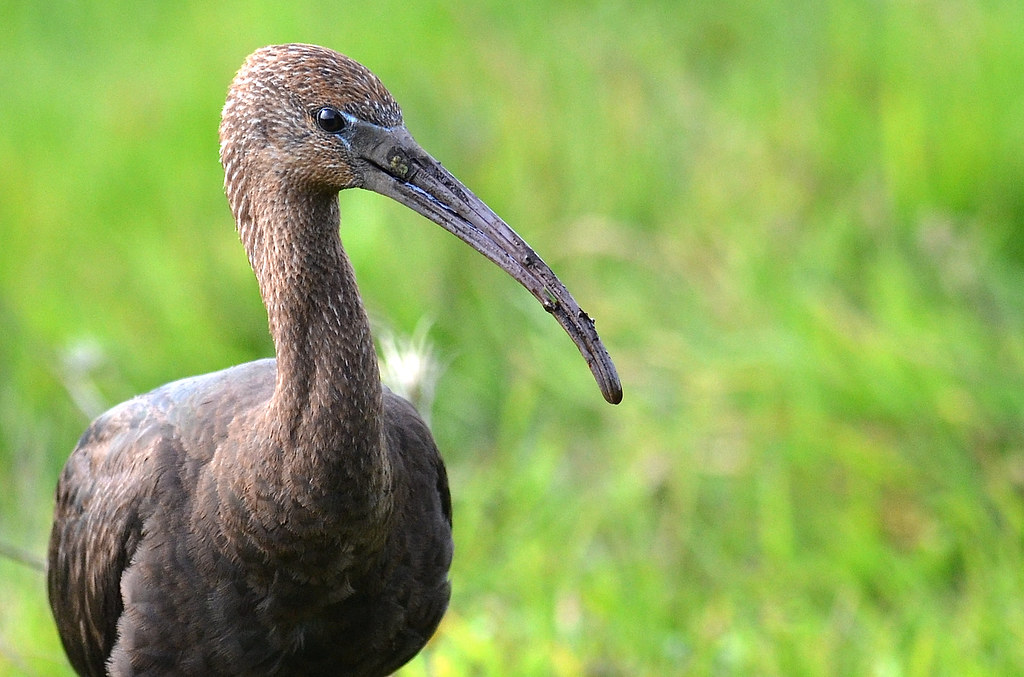
Photo of the Week - Glossy Ibis

Glossy Ibis, Horwich Moors (c) David Shallcross
There were four of these rarely seen birds giving superb views in and around the fields next to the Bob's Smithy Pub on Chorley Old Road, Horwich, Bolton.  What a cracking photo by David Shallcross.

Here's some more Glossy Ibis photos with video footage taken at the same location by Martyn Jones on 1st October:


Glossy Ibis in Horwich (c) Martyn Jones
 

L.O.S. Sponsored Birdwatch - 21 September 2013

The day dawned pleasantly weather-wise, and the teams set off with enthusiasm and verve! As they always do, some to keep going to the very end, some to struggle to keep going to nearly the end and others to enjoy what they could and go home for a cup of tea!

The winning team King and Don’t tell him Pike got off to a roaring start, said by some with unfair advantage because of knowing where the birds were but they weren’t shy of sharing so it doesn’t matter. They clocked up their winning total of 57 species including Grey Partridge, Wheatear and Black Redstart - incidenatlly Eddie now informs me he missed a White Wagtail off his list and it should read 58!

The Indian Runners had a good day too but were seen to shoo the birds away when another team arrived in that hide - but this was countered by that team telling them there wasn’t a bird to be seen in any of the other hides, measure for measure.

The third team was the Feather Brains who did sterling work on getting their 55 species and if the Bullfinches and a Thrush had shown up as expected would have given the other two a better run for their money – biased about this team, well yes, because I was in it!  Joe and Phil had a good day and got 49 species a bit low for Joe but I suspect he kept stopping for coffee.

The Bald Eagles came next with 42 species an unusually low count for this trio of birders they must have been having a bad hair day! Last but certainly not least came the Jackdaws and Teals with 37 species they scoured Pennington Country Park to the nth degree and didn’t leave a blade of grass unturned, nor any seat not sat on!

Well done to all who took part  - if you think you can do better then get yourself into a team in time for next year; thank you to all who sponsored any of the teams, there is still time to sponsor should you wish to. It was a thoroughly enjoyable day with friendly banter and some very good companions followed by an evening meal which was enjoyed by all.
Joan Disley

The results of the sponsored birdwatch held on the 21st September 2013 were as follows:

Position Team Name Species
1st Don't tell 'em Pike 57
2nd The Indian Runners 57
3rd The Feather Brains 55
4th Joe and Phil 49
5th The Bald Eagles 42
6th The Jackdaws and Teals 37

After the day's birding exploits many of the members went for a nice meal organised by Al Foy at the Whistling Wren in Leigh where a good night was had by all - thanks Al.

The amount of sponsorship money raised will be announced here shortly.

Brockholes Nature Reserve – 8th September 2013

For our first outing of the new session we were going to Brockholes Nature Reserve near Preston, which was somewhere different we hadn’t been before which is always interesting. It was also nice to have two new members in Keith and Tony who joined us for the first time. This is a new reserve that was only opened to the public at Easter 2011 by the Lancashire Wildlife Trust. It is free to walk round the reserve but there is a charge for parking your car with an increasing amount the longer you are there.  Here's a link to the types of habitat that can be found there: Brockholes Habitats

One part of the reserve edges on to the River Ribble where we were heading first but as we stopped part way to look at a Reed Bunting perched on a small bush Joan spotted a beautiful female Roe Deer just quietly walking into the reeds and long grasses growing all round the bush. There wasn’t much on the river but while we were in this area we saw a Buzzard in the distance being mobbed by six Crows, a Sparrowhawk flew past us and a little later we saw a Kestrel. Later we saw two Buzzards soaring round together over the trees and just after this we once again saw a single bird being mobbed but this time by a Sparrowhawk which would not give up as it went on for some time. On a few occasions we saw the Buzzard flip over onto its back so its talons were now pointing upwards to defend itself against the Sparrowhawk diving at it from above.

From here we made our way to a wooded area but just before we reached this we came across a sheltered corner in the sunshine where there was a Blackberry patch with a lot of Himalayan Balsam growing through it but it was attracting a number of dragonflies that settled on the leaves to enjoy the warm sunshine. There was Migrant Hawker, Brown Hawker and both male and female Common Darter. These were also joined by the odd Speckled Wood Butterfly at times and a Blackbird, which was attracted by the ripening fruit. Once in the wood we had birds such as Nuthatch, Treecreeper, Goldcrest, Coal Tit, Blue Tit and Wren.

In other parts of the reserve are two large areas of water with a few bird hides around the edges but there was nothing too unusual on these waters. We saw the usual Canada Geese, Mute Swan and Mallard plus a few Tufted Duck and Teal. There was also a Little Grebe, some Cormorants and Grey Heron but the only waders we saw were a few Lapwing. On one occasion a small group of these birds took to the air and we noticed they had an unusual companion flying with them which was a single Starling. The ducks on one of these waters had also been joined by a Black Swan that must have escaped from somewhere. As we walked round House Martins had been seen and as we arrived back at the cars a Swallow flew over our heads.

The only other butterfly we saw was Large White but we did get a good look at a caterpillar of the Buff Tip Moth. Most of the flowers were now gone but there were still patches of Bird’s Foot Trefoil in flower Marsh Woundwort and the last remaining flowers on the Purple Loosestrife could be seen. Another bush that was looking good was the Guelder Rose that had clusters of its shiny berries starting to turn red which eventually will provide food for the birds.

This is still a young reserve so hopefully in time it will improve and maybe a visit at a different time in the year might give us more birds to look at, nevertheless I hope everyone enjoyed it, in particular Keith and Tony and we look forward to them joining us again for our trips out etc.

As always thanks to Al for organising the trip and to Joan and Jim for my lift.

Jeff Hurst